
Every spring, Toronto homeowners get hit with the same wave of bad news. In June 2025, the Toronto Police Service issued a public warning about a sharp rise in home renovation scams — door-to-door pitches, vanishing contractors, and shoddy work that leaves homeowners thousands of dollars worse off. The problem isn't going away. In March 2026, Hamilton Police issued another alert about the same pattern hitting their region.
The numbers are sobering. Ottawa police reported renovation scams cost residents an estimated $250,000 in just two weeks back in 2023. And while roofing and driveway paving get the headlines, painting is one of the most common entry points for contractor fraud — partly because it's low-regulation, partly because the work looks "easy enough" that homeowners feel comfortable accepting verbal estimates and quick handshake deals.
If you're hiring a painting contractor in Toronto in 2026, knowing what to watch for isn't optional. This guide walks through the seven biggest red flags when choosing a painter, what a legitimate quote actually looks like, how to verify a contractor under Ontario law, and what your consumer protection rights are if something goes wrong.
Why Hiring the Wrong Painting Contractor in Toronto Is a Growing Risk
Renovation Scams Are Spiking in the GTA
The Toronto Police Service confirmed in their 2025 spring advisory that complaints involving roofing, driveway resurfacing, brickwork, landscaping, and general home renovations spike every year as the weather warms. The pattern is consistent: out-of-area "contractors" go door-to-door with the same script, offer leftover materials at steep discounts, demand cash up front, and either vanish before completion or do work so poor it has to be redone professionally.
Painting fits this pattern even better than roofing or driveways. Anyone can buy a sprayer at Home Depot, throw on a logo'd t-shirt, and pass themselves off as a Toronto painter. There's no provincial trade licence required for residential painting in Ontario — which is exactly why doing your own homework matters more here than it does for an electrician or plumber.
What You Stand to Lose
The worst-case scenarios aren't theoretical. Homeowners across Canada have reported losing $11,000 deposits to contractors who never returned, $34,000 to roofing scammers, and nearly $50,000 to rushed jobs that had to be torn out and redone. Painting projects rarely hit those numbers individually, but a botched interior painting job on a Toronto two-storey home can easily cost $4,000–$8,000 to fix — on top of what you already paid the original crew.
Even painting contractors themselves get targeted by scams. Our team at DC Painting recently flagged a cheque overpayment scam aimed at our business, which is a reminder that the painting industry attracts bad actors on every side of the transaction. The homeowners most likely to get hit are the ones who skip the vetting step because they're in a rush or want to save a few hundred dollars on the lowest bid. Those few hundred dollars almost always end up being the most expensive money you spent on the entire project.
The 7 Biggest Red Flags When Hiring a Painting Contractor
1. Door-to-Door Pitches and "Leftover Materials" Offers
The single most common scam pattern flagged by both Toronto and Hamilton Police involves unsolicited door-knocks. The pitch is always some version of: "We're working on your neighbour's house and noticed your trim, siding, or fascia needs work. We have leftover paint and can give you a great price if you sign today."
Legitimate Toronto painting companies don't operate this way. They get business through referrals, online reviews, and inbound calls — not by cold-knocking residential streets. If a painter shows up at your door unannounced offering exterior painting or any other service, the safest response is to take their card, send them away, and verify the company independently before calling back.
2. Cash-Only Deals or Large Upfront Deposits
If a contractor whispers about a "discount for cash," what they're actually offering is a way for them to skip taxes and avoid leaving a paper trail. With no record of payment, you have no recourse if the job goes sideways. The Ontario consumer protection guidance is clear: keep down-payments to a minimum and never pay the full amount before the work is done.
The industry standard for a Toronto painting deposit is 10–25%, with the rest paid at completion or in milestones tied to specific stages of the project. Anyone asking for 50% or more up front is either undercapitalized or planning to disappear with your money.
3. No Written Contract (or a Vague One)
Verbal estimates are the fastest way to get burned. Without a written scope of work, there's nothing stopping a contractor from showing up, doing one thin coat, and calling it finished. A real Toronto painting contract should spell out exactly what's being painted, what surface prep is included, what paint brand and finish are being used, how many coats, who handles cleanup, and the total fixed price with HST.
Ontario's Consumer Protection Act gives homeowners specific protections, but only if there's a written contract to enforce. Vague language like "paint the interior" is a setup for upcharges and disputes.
4. A Quote That's Suspiciously Lower Than the Rest
If you get three quotes and one is 40% below the others, that's not a deal — it's a warning. The contractor is either uninsured, planning to use cheap paint, skipping the prep work, or pricing below cost to win the job and then upselling you later with "unexpected issues."
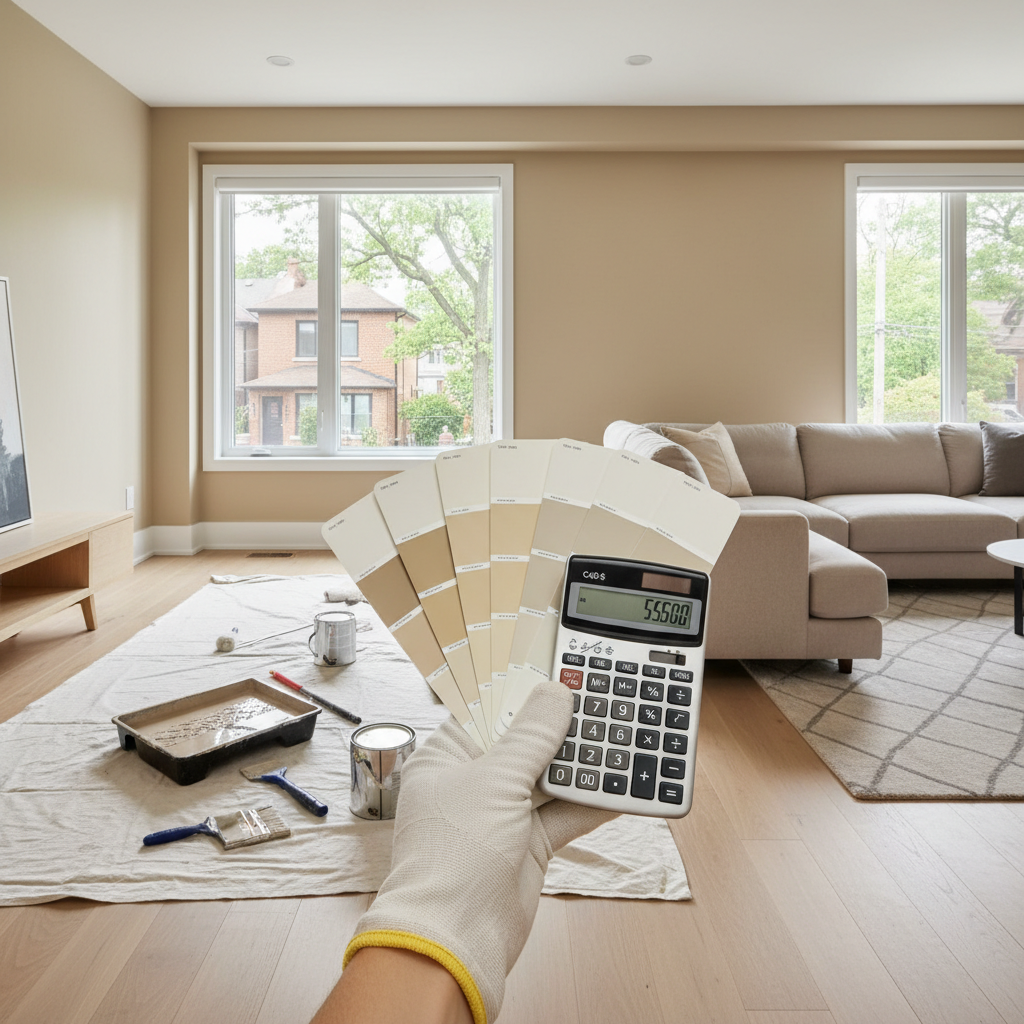
A legitimate Toronto painting quote falls within a predictable range based on square footage and scope. For context on what painting actually costs in Toronto in 2026, the math is fairly transparent — labour makes up 70–85% of the price, and quality paint runs roughly $80–$120 per gallon. There's a floor below which the numbers simply don't work, and any contractor pricing below that floor is cutting something you'll regret later.
5. No Insurance, WSIB Coverage, or Business Registration
This is the red flag with the biggest financial consequences. If an uninsured painter falls off a ladder on your property, you can be held personally liable for their medical bills and lost wages. The Ontario industry standard for a contractor is $2 million in general liability insurance plus WSIB coverage for any employees.
There's a nuance worth knowing: under Ontario's expanded compulsory coverage rules, contractors performing home renovation work paid directly by a homeowner are technically exempt from mandatory WSIB registration. But the best painting companies carry it anyway, because it signals they take safety, taxes, and professionalism seriously. Any contractor who refuses to show you proof of liability insurance should be removed from your list immediately.
6. No Online Presence, Reviews, or Verifiable References
Every legitimate painting business in 2026 has an indexed website, a Google Business Profile with real reviews, and a presence on at least one third-party platform like HomeStars or BBB Canada. If a contractor has no online footprint, no photos of past work, and no references they can connect you with, you have no way to verify anything they say about themselves.
Be especially wary of websites that look polished but have no reviews, no addresses, and no team photos. Fake websites are cheap to spin up — what's harder to fake is a 5-year track record of public, verifiable customer feedback.
7. High-Pressure Sales and "Today Only" Pricing
Any contractor who pressures you to sign on the spot is using the same playbook scammers have used for decades. The "sudden price increase" tactic — where the quoted price jumps mid-conversation because the contractor "found a serious problem" — is one of the specific warning signs flagged by Hamilton Police. Legitimate Toronto painters give you a written quote and let you take a few days to compare. They don't need to close you in the driveway.
What Should a Legitimate Painting Quote in Toronto Include?
The Five Things Every Written Estimate Should Spell Out
A professional painting estimate in Toronto should clearly show: the exact scope of work (every room or surface being painted, with measurements), the paint brand and finish being used (Benjamin Moore Regal, Sherwin-Williams Emerald, etc.), the prep work included (patching, sanding, caulking, priming), the number of coats, and the total fixed price including HST and any travel or material surcharges.
A good contractor will also list what's not included — for example, repairing major drywall damage, removing wallpaper, or moving large furniture. These exclusions protect both you and the painter from disputes later. If your quote is one paragraph and a single dollar figure, ask for it in writing with full detail. Any contractor who refuses is telling you exactly how they plan to operate.
Why the Lowest Bid Usually Costs You More
When three painters quote $3,000, $4,200, and $4,500 for the same job, the $3,000 quote isn't a "deal" — it's a different scope. That contractor is almost always planning to do one coat instead of two, skip the prep work, use builder-grade paint instead of premium, or rush through trim and detail areas where the difference between professional and amateur work is most visible.
Proper wall prep — patching nail holes, sanding glossy surfaces, caulking trim gaps, priming stains — is what separates a paint job that holds up for ten years from one that starts peeling in eighteen months. It's also the first thing low-bid contractors cut.
How Do You Verify a Painting Contractor in Ontario?
Check Insurance, WSIB, and Business Registration
Ask for a certificate of insurance from the contractor's insurance broker — not just a verbal claim. Confirm the policy is current and that it covers the dollar amount of your project. For WSIB, you can verify a contractor's clearance certificate directly through the WSIB's online clearance lookup tool, which shows whether their account is active and in good standing.
For business registration, Ontario maintains a public business registry where you can confirm the company is legally incorporated and registered. A painter with a real business name, HST number, and WSIB account is several orders of magnitude more accountable than someone operating out of a personal cell phone with no paperwork.
Use HomeStars, BBB Canada, and Google Reviews the Right Way
Reviews are useful, but you have to read them critically. Look at the volume (a contractor with 4 reviews tells you very little, one with 80+ tells you a lot), the consistency over time (a sudden flood of 5-star reviews in one month is suspicious), and the response pattern — how does the owner respond to negative reviews? A professional, calm, solution-oriented response to a 1-star review tells you more about a contractor than ten 5-star raves.
HomeStars Verified Pros go through identity and insurance checks that filter out the worst operators. BBB Canada accreditation is another layer. None of these are perfect, but stacked together they create a profile that's very hard to fake.
What Are Your Rights as a Homeowner Under Ontario's Consumer Protection Act?
The 10-Day Cooling-Off Period for Door-to-Door Contracts
Under Ontario's Consumer Protection Act, if you sign a contract for goods or services valued over $50 at your home (rather than at the contractor's place of business), you have a 10-day cooling-off period to cancel without penalty — no questions asked. This is specifically designed to protect homeowners from high-pressure door-to-door sales.
If a contractor knocks, gets you to sign, and starts demanding deposit money the same day, you can cancel in writing within 10 calendar days and get your full deposit back. This single piece of legislation has saved Toronto homeowners thousands of dollars when they realize after the fact that they were rushed into a bad decision.
How to Protect Your Deposit and Final Payment
Use traceable payment methods only — e-transfer, cheque, or credit card. Cash gives you no protection if the contractor disappears. Structure payments so they're tied to completed milestones: deposit on signing, progress payment when the prep is done and the first coat is on, and final payment when the work is fully completed and you've done a walkthrough.
Never pay the final balance until you've inspected every surface in good lighting and the contractor has handled any deficiencies. Once that final cheque clears, your leverage is gone.
How to Choose a Painting Contractor You Can Actually Trust
The Three Signs of a Painter Worth Hiring
After everything above, the painters who pass the smell test usually share three traits. First, they show up to the in-home estimate on time, in branded vehicles, and they walk through the entire scope with you — not just measure and quote. Second, their written estimate is detailed and matches what they said verbally during the walkthrough. Third, they answer questions about insurance, references, and warranty without hesitation, and they'll happily wait while you compare other quotes.
At DC Painting & Services, our entire approach is built around that level of transparency. With over 10 years of trades experience, we walk through every project in person, send a detailed written quote, and stand behind the work. That's the bar to look for — whether you hire us or someone else.
What to Expect During a Real In-Home Estimate
A proper estimate appointment in Toronto takes 30–60 minutes for a typical interior project. The contractor should measure each space, ask about the condition of walls and trim, ask what colours and finishes you're considering, and discuss the timeline and how the work will affect your daily routine. They should also identify potential issues — water stains that need priming, peeling trim that needs sanding, drywall cracks that need patching — and either include those repairs in the quote or call them out as exclusions.
If a contractor quotes you over the phone without ever visiting your home, that's a quote, not an estimate. The price you're going to actually pay is almost certain to be different.
Choose Carefully and the Rest Takes Care of Itself
Hiring a painting contractor in Toronto in 2026 isn't difficult — but it does require slowing down enough to do real due diligence. The seven red flags above (door-to-door pitches, cash deals, no written contract, suspiciously low quotes, no insurance, no online presence, high-pressure sales) are the patterns that show up in almost every contractor scam story across Ontario. If you see two or more in a single conversation, walk away.
The good news is that the same checks that protect you from scammers also tend to surface the best painters in your area — the ones with insurance, written quotes, real reviews, and the patience to walk you through their process. That's the contractor you want.
DC Painting & Services has been quietly building that kind of track record across Toronto and the GTA for over a decade. Get a free, no-obligation quote and see what a proper estimate looks like in practice.